Buy learningadventuresproject.eu ?
We are moving the project
learningadventuresproject.eu .
Are you interested in purchasing the domain
learningadventuresproject.eu ?
domain@kv-gmbh.de · 0541-91531010
Buy learningadventuresproject.eu ?
Narrator or omniscient narrator?
In the context of storytelling, the choice between a narrator or an omniscient narrator depends on the desired level of perspective and insight into the characters and events. A narrator typically provides a more personal and limited viewpoint, often sharing the story from their own perspective or a specific character's point of view. On the other hand, an omniscient narrator has a broader scope, knowing and revealing information beyond what any single character could know, offering a more objective and all-encompassing view of the story. Ultimately, the decision between a narrator or an omniscient narrator can greatly impact the storytelling style and the reader's experience of the narrative. **
Is a personal narrator the same as a he/she narrator?
A personal narrator and a he/she narrator are not necessarily the same. A personal narrator refers to a narrator who is directly involved in the story or is a character within the narrative. On the other hand, a he/she narrator is a third-person narrator who is not a character in the story but refers to the characters using "he" or "she." While a personal narrator can also be a he/she narrator, they are not always interchangeable as they serve different narrative functions. **


Similar search terms for Narrator
Top-Angebote
Products related to Narrator:
-
HARPERCOLLINS Creative Confidence by Tom & David Kelley – Unleashing Your Creative Potential & Innovation MindsetA powerful and inspiring book from the founders of IDEO, the award-winning design firm, on unleashing the creativity that lies within each and every one of us. Too often, companies and individuals assume that creativity and innovation are the domain of the ‘creative types’. But two of the foremost experts in innovation, design and creativity on the planet show us that each and every one of us is creative. In an entertaining and inspiring narrative that draws on countless stories from their work at IDEO, and with many of the world's top companies and design firms, David and Tom Kelley identify the principles and strategies that will allow us to tap into our creative potential in our work lives, and in our personal lives, allow us to think outside the box in terms of how we approach and solve problems. ‘Creative Confidence’ is a book that will help each of us be more productive and successful in our lives and in our careers.4,95 £*Shipping: 1,99 £Secure redirect to the provider
-
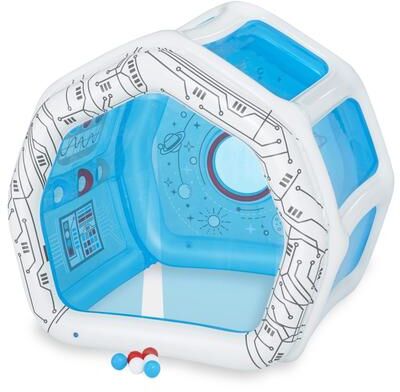
Bestway Space Station Exploration Kids Inflatable Playhouse - MultiDevelops: -Gross Motor Skills: stimulates your child's ability to get up and move around, gaining control of their bodies and movement - Imagination: encourages your child to dream of new ways to see the world around them - Confidence & Communication:…52,99 $*Shipping: 0,00 $Secure redirect to the provider
-
Canva Pro Education - 1 year SubscriptionWhen you make a purchase, you will receive an e-mail to subscribe to Canva Education , which will give you access to all the professional features of Canva Pro + 1800 free neutral Instagram post templates Please note: Brand Kite and Canva AI are not included How to Copy a Project from Your Personal Canva Account to a Canva Pro Class Account Discover the power of professional design with our annual subscription to Canva Pro. With Canva Pro, you'll have access to a wide range of premium tools and resources that will allow you to create stunning visual content for your business, personal projects, and more. Here's what you can expect with a year of Canva Pro: Unlimited access to over 100 million premium resources: Images, video, audio, graphics, and more, all ready to be used in your projects. Customisable templates: Thousands of high-quality templates for every need, from presentations to social media posts, from flyers to business cards. Advanced design tools: Features such as one-click background removal, the creation of customised brand kits, and the ability to resize your designs with a single click. Real-time collaboration: Work together with your team, leaving comments and suggestions directly in the projects, for seamless collaboration. Direct publication on social media: Schedule and publish your content directly from Canva on all major social platforms. Unlimited cloud storage: Save and organise all your projects in one place, with unlimited space. Don't miss the opportunity to take your design to the next level. With Canva Pro, the possibilities are endless. Subscribe now and start creating like a pro! How come the licence is priced so low? We offer retail licences that are used and discontinued by the previous owner since the EC ruling C-128/2011. That is why you can purchase the official licence on our site at a cheaper price. This is a product in STUDENT Version.6,87 £*Shipping: 0,00 £Secure redirect to the provider


-
What is a fictional narrator?
A fictional narrator is a character within a work of fiction who tells the story to the reader. This character may be a participant in the events of the story, or they may be an observer recounting the events from a distance. The fictional narrator's perspective and voice shape the reader's understanding of the story, and their reliability or unreliability can add complexity to the narrative. The choice of narrator can greatly influence the reader's experience of the story. **
-
What is the difference between a first-person narrator and a third-person limited narrator?
A first-person narrator is a character within the story who tells the events from their own perspective using "I" or "we." This type of narrator is limited to their own thoughts, feelings, and experiences. On the other hand, a third-person limited narrator is an external voice that focuses on the thoughts and feelings of one character, but uses pronouns like "he," "she," or the character's name. This type of narrator provides insight into one character's perspective while still maintaining some distance from the story. **
-
What is the difference between a first-person narrator and a limited first-person narrator?
A first-person narrator is a character in the story who tells the events from their own perspective using "I" and "me." A limited first-person narrator is a type of first-person narrator who has a limited view of the events in the story, only knowing and sharing what they personally experience or witness. This means that the limited first-person narrator may not have access to all the information or perspectives in the story, leading to a more subjective and potentially biased account of events. **
-
Is the narrator a literary self?
The narrator in a literary work may or may not be a literary self. A literary self is a character or persona that closely resembles the author and may share similar experiences, thoughts, or beliefs. In some cases, the narrator may indeed be a literary self, serving as a vehicle for the author to express their own perspectives and experiences. However, in other cases, the narrator may be a completely fictional creation, with no direct connection to the author's own identity. It ultimately depends on the specific work and the intentions of the author. **


Do you have this inner narrator?
As an AI language model, I do not have an inner narrator in the same way that humans do. I do not have personal experiences, emotions, or a sense of self, so I do not have an inner voice or narrator to reflect on my thoughts and experiences. My responses are generated based on patterns in the data I have been trained on, rather than any personal inner monologue. **
What is the difference between a commenting narrator and a judgmental narrator? Do you have any examples?
A commenting narrator provides observations or insights about the characters or events in a story without passing explicit judgment, while a judgmental narrator expresses clear opinions or evaluations about the characters or events. An example of a commenting narrator can be found in J.D. Salinger's "The Catcher in the Rye," where the protagonist, Holden Caulfield, shares his thoughts and feelings about the people he encounters without explicitly condemning them. In contrast, a judgmental narrator can be seen in Jane Austen's "Pride and Prejudice," where the narrator offers critical commentary on the characters' actions and personalities, such as Mr. Collins' obsequious behavior. **
Top-Angebote
Products related to Narrator:
-
Smart Shopping Spot Montessori Busy Machine, Early Education Cognitive Game, Hand Eye Coordination Exploration Toys For Kids orangeEncourage Cognitive Growth with Montessori Busy Machine The Kids Montessori Busy Machine is an interactive toy designed to promote early learning through fun and exploration. This cognitive game challenges young minds while developing essential...34,97 $*Shipping: 0,00 $Secure redirect to the provider
-
Sesderma Reti Age 5 Liposomal Serum Anti-Aging Innovation 30mLA facial serum for wrinkles and signs of ageing. Reduces wrinkles and fine lines. Hydrates and strengthens barrier. Restores youthful radiance. 5-Retinoid System: smooths wrinkles, accelerates renewal, and boosts collagen. Biomimetic Peptides: fill expression lines by stimulating collagen synthesis.54,51 £*Shipping: 5,34 £Secure redirect to the provider
-
HARPERCOLLINS Creative Confidence by Tom & David Kelley – Unleashing Your Creative Potential & Innovation MindsetA powerful and inspiring book from the founders of IDEO, the award-winning design firm, on unleashing the creativity that lies within each and every one of us. Too often, companies and individuals assume that creativity and innovation are the domain of the ‘creative types’. But two of the foremost experts in innovation, design and creativity on the planet show us that each and every one of us is creative. In an entertaining and inspiring narrative that draws on countless stories from their work at IDEO, and with many of the world's top companies and design firms, David and Tom Kelley identify the principles and strategies that will allow us to tap into our creative potential in our work lives, and in our personal lives, allow us to think outside the box in terms of how we approach and solve problems. ‘Creative Confidence’ is a book that will help each of us be more productive and successful in our lives and in our careers.4,95 £*Shipping: 1,99 £Secure redirect to the provider
-
Narrator or omniscient narrator?
In the context of storytelling, the choice between a narrator or an omniscient narrator depends on the desired level of perspective and insight into the characters and events. A narrator typically provides a more personal and limited viewpoint, often sharing the story from their own perspective or a specific character's point of view. On the other hand, an omniscient narrator has a broader scope, knowing and revealing information beyond what any single character could know, offering a more objective and all-encompassing view of the story. Ultimately, the decision between a narrator or an omniscient narrator can greatly impact the storytelling style and the reader's experience of the narrative. **
-
Is a personal narrator the same as a he/she narrator?
A personal narrator and a he/she narrator are not necessarily the same. A personal narrator refers to a narrator who is directly involved in the story or is a character within the narrative. On the other hand, a he/she narrator is a third-person narrator who is not a character in the story but refers to the characters using "he" or "she." While a personal narrator can also be a he/she narrator, they are not always interchangeable as they serve different narrative functions. **
-
What is a fictional narrator?
A fictional narrator is a character within a work of fiction who tells the story to the reader. This character may be a participant in the events of the story, or they may be an observer recounting the events from a distance. The fictional narrator's perspective and voice shape the reader's understanding of the story, and their reliability or unreliability can add complexity to the narrative. The choice of narrator can greatly influence the reader's experience of the story. **
-
What is the difference between a first-person narrator and a third-person limited narrator?
A first-person narrator is a character within the story who tells the events from their own perspective using "I" or "we." This type of narrator is limited to their own thoughts, feelings, and experiences. On the other hand, a third-person limited narrator is an external voice that focuses on the thoughts and feelings of one character, but uses pronouns like "he," "she," or the character's name. This type of narrator provides insight into one character's perspective while still maintaining some distance from the story. **
Similar search terms for Narrator
-
Bestway Space Station Exploration Kids Inflatable Playhouse - MultiDevelops: -Gross Motor Skills: stimulates your child's ability to get up and move around, gaining control of their bodies and movement - Imagination: encourages your child to dream of new ways to see the world around them - Confidence & Communication:…52,99 $*Shipping: 0,00 $Secure redirect to the provider
-
Canva Pro Education - 1 year SubscriptionWhen you make a purchase, you will receive an e-mail to subscribe to Canva Education , which will give you access to all the professional features of Canva Pro + 1800 free neutral Instagram post templates Please note: Brand Kite and Canva AI are not included How to Copy a Project from Your Personal Canva Account to a Canva Pro Class Account Discover the power of professional design with our annual subscription to Canva Pro. With Canva Pro, you'll have access to a wide range of premium tools and resources that will allow you to create stunning visual content for your business, personal projects, and more. Here's what you can expect with a year of Canva Pro: Unlimited access to over 100 million premium resources: Images, video, audio, graphics, and more, all ready to be used in your projects. Customisable templates: Thousands of high-quality templates for every need, from presentations to social media posts, from flyers to business cards. Advanced design tools: Features such as one-click background removal, the creation of customised brand kits, and the ability to resize your designs with a single click. Real-time collaboration: Work together with your team, leaving comments and suggestions directly in the projects, for seamless collaboration. Direct publication on social media: Schedule and publish your content directly from Canva on all major social platforms. Unlimited cloud storage: Save and organise all your projects in one place, with unlimited space. Don't miss the opportunity to take your design to the next level. With Canva Pro, the possibilities are endless. Subscribe now and start creating like a pro! How come the licence is priced so low? We offer retail licences that are used and discontinued by the previous owner since the EC ruling C-128/2011. That is why you can purchase the official licence on our site at a cheaper price. This is a product in STUDENT Version.6,87 £*Shipping: 0,00 £Secure redirect to the provider
-
Smart Shopping Spot Montessori Busy Machine, Early Education Cognitive Game, Hand Eye Coordination Exploration Toys For Kids blueEncourage Cognitive Growth with Montessori Busy Machine The Kids Montessori Busy Machine is an interactive toy designed to promote early learning through fun and exploration. This cognitive game challenges young minds while developing essential...34,97 $*Shipping: 0,00 $Secure redirect to the provider
-
What is the difference between a first-person narrator and a limited first-person narrator?
A first-person narrator is a character in the story who tells the events from their own perspective using "I" and "me." A limited first-person narrator is a type of first-person narrator who has a limited view of the events in the story, only knowing and sharing what they personally experience or witness. This means that the limited first-person narrator may not have access to all the information or perspectives in the story, leading to a more subjective and potentially biased account of events. **
-
Is the narrator a literary self?
The narrator in a literary work may or may not be a literary self. A literary self is a character or persona that closely resembles the author and may share similar experiences, thoughts, or beliefs. In some cases, the narrator may indeed be a literary self, serving as a vehicle for the author to express their own perspectives and experiences. However, in other cases, the narrator may be a completely fictional creation, with no direct connection to the author's own identity. It ultimately depends on the specific work and the intentions of the author. **
-
Do you have this inner narrator?
As an AI language model, I do not have an inner narrator in the same way that humans do. I do not have personal experiences, emotions, or a sense of self, so I do not have an inner voice or narrator to reflect on my thoughts and experiences. My responses are generated based on patterns in the data I have been trained on, rather than any personal inner monologue. **
-
What is the difference between a commenting narrator and a judgmental narrator? Do you have any examples?
A commenting narrator provides observations or insights about the characters or events in a story without passing explicit judgment, while a judgmental narrator expresses clear opinions or evaluations about the characters or events. An example of a commenting narrator can be found in J.D. Salinger's "The Catcher in the Rye," where the protagonist, Holden Caulfield, shares his thoughts and feelings about the people he encounters without explicitly condemning them. In contrast, a judgmental narrator can be seen in Jane Austen's "Pride and Prejudice," where the narrator offers critical commentary on the characters' actions and personalities, such as Mr. Collins' obsequious behavior. **
* All prices are inclusive of VAT and, if applicable, plus shipping costs. The offer information is based on the details provided by the respective shop and is updated through automated processes. Real-time updates do not occur, so deviations can occur in individual cases. ** Note: Parts of this content were created by AI.